1-Group vs 2-Group Espresso Machines: Which Is Right for Your Café?
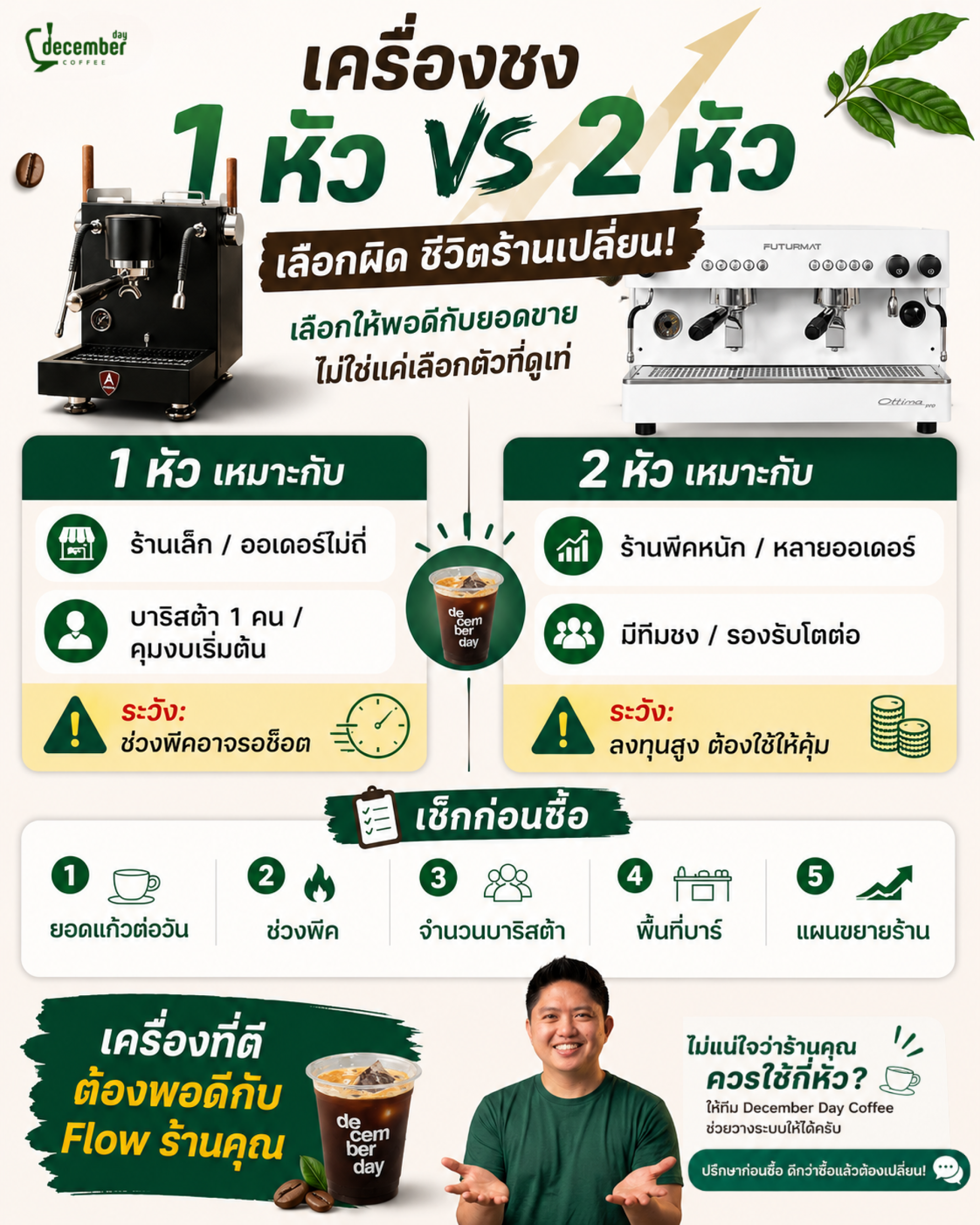
1-Group vs 2-Group Espresso Machines: Which Is Right for Your Café?
An espresso machine is one of the largest investments in a coffee shop. The most useful question is not simply which model is best, but which machine fits the way your shop actually sells and operates. A machine that is too small can create queues during rush periods, while an oversized machine can consume more space, power and capital without necessarily increasing sales.
This guide compares 1-group and 2-group commercial espresso machines across peak-hour capacity, counter space, electrical and plumbing requirements, staffing and growth plans. The goal is to help you decide from your shops real operating datanot appearance or assumptions alone.
What does the number of groups mean?
The group head is where the barista locks in the portafilter to extract espresso. A 1-group machine has one brewing position; a 2-group machine has two. Two groups allow more shots to be prepared and extracted at the same time, but group count does not determine the capacity of the whole bar.
Every drink also involves grinding and dosing, tamping, steaming milk, assembling the recipe, taking payment and handing off the order. If the grinder or milk station is the bottleneck, adding another group head alone may not shorten the queue as much as expected.
Dimensions, power draw and boiler capacity can also differ significantly between machines from the same range. Always check the specification sheet for the exact model and ask a qualified technician to assess the installation site.
Quick comparison: 1 group vs 2 groups
| Factor | 1-group machine | 2-group machine |
|---|---|---|
| Counter space | More compact; suitable for kiosks and tight counters | Needs more width and working clearance |
| Peak-hour work | Suitable when orders rarely overlap and one main barista works the station | More flexible for overlapping orders and multiple baristas |
| Initial investment | Often easier to start with, depending on specifications | Usually higher, with possible additional utility costs |
| Power and water | Comparable models generally need less space and power | Check electrical load, fresh water, drainage and exact specifications |
| Team workflow | Well suited to a single-station workflow | Better for dividing tasks and working simultaneously |
| Growth capacity | Cost-effective when peak demand remains moderate | Provides more headroom for rush periods and team expansion |
This table is a planning framework. Actual capacity depends on the model, boiler system, power and operating style. Verify manufacturer documentation before purchase.
Measure peak demand, not only daily sales
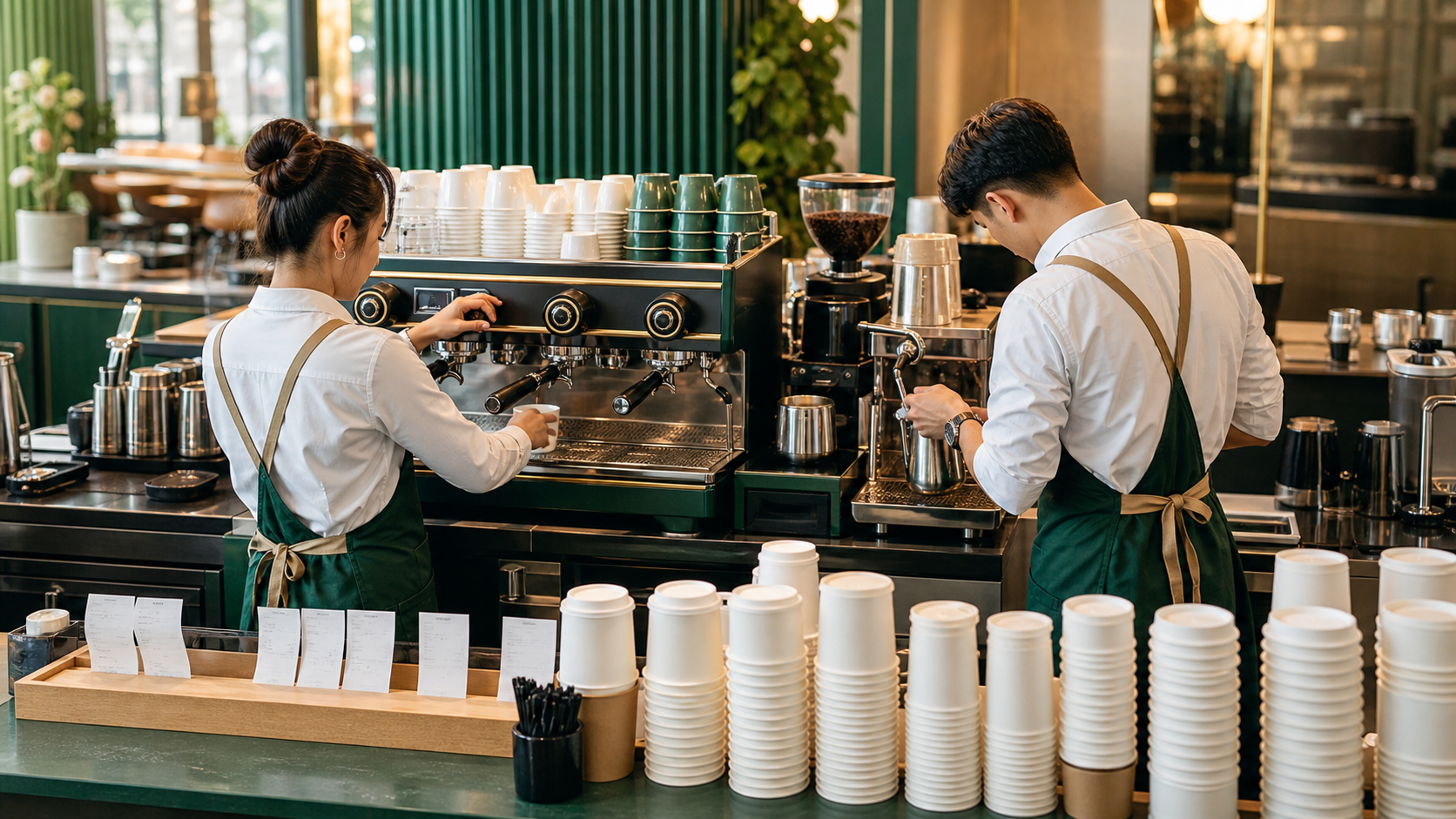
Two cafés may both sell 100 cups per day but need different machines. One may spread orders over ten hours, while the other sells half of its drinks in a single morning rush. The second shop faces much greater pressure on extraction, milk steaming and handoff even though total daily sales are identical.
Before choosing a machine, collect or estimate these five figures:
- Orders during the busiest 15 minutes, not only the daily total.
- The share of espresso-based drinks versus tea, cocoa, blended or ready-to-drink items.
- The share of milk drinks, because steam capacity may become the main bottleneck.
- The number of people working at the bar and whether tasks can be divided safely.
- The acceptable waiting time, especially for office, takeaway and drive-through formats.
If the café has not opened yet, build normal, peak and growth scenarios from the business plan, seating, location traffic and service format. Simulate a realistic order sequence rather than buying from one forecast number.
When is a 1-group machine the better fit?
A commercial 1-group machine is not automatically an entry-level choice. With the right specifications, it can be an efficient professional solution when the operating model is clear.
- A kiosk, small café or counter with limited space
- One main barista and limited overlapping orders
- Coffee is one of several menu categories rather than the entire business
- A restaurant, bakery or office serving coffee as an additional service
- A need to control initial investment while retaining commercial-grade performance
Do not decide from the phrase one group alone. Check boiler capacity, simultaneous brewing and steaming ability, power, direct plumbing, recovery time, service support and warranty. A milk-heavy menu can still build a queue if steam performance cannot keep up.
When is a 2-group machine worth the investment?
A 2-group machine makes sense when the shop regularly handles overlapping orders and has a workflow that can use both groups. It allows baristas to alternate preparation, extraction and cleaning, and can support more than one person at the machine during busy periods.
- Clear rush periods before work, at lunch or on weekends
- Espresso and milk drinks represent a large share of sales
- Two or more bar staff work during peak periods
- Takeaway, delivery and in-store channels arrive at the same time
- A realistic 1224 month plan to increase demand, seating or locations
However, two groups do not solve every bottleneck. A slow grinder, narrow tamping area or conflicting staff paths can still limit output. Design the grinder, tamping station, milk area, sink and handoff point as one connected system.
7 checks before requesting an espresso-machine quotation
1. Menu mix and sales share
List core recipes, shots per drink, milk drinks and blended drinks. This reveals whether the likely bottleneck is extraction, steam, grinding or another step.
2. Expected peak period
Estimate bills and cups for every 15 minutes of the rush. Separate counter, delivery and preorder demand to see the real workload.
3. Grinder capacity
The grinder must dose consistently and fast enough for the machine. If you serve more than one coffee, plan the number and position of grinders from the beginning.
4. Counter dimensions and ergonomics
Measure actual width, depth and height, including space for grinders, tamping, pitchers, ingredients and service access. Avoid layouts that force baristas to cross arms or collide during a rush.
5. Electricity, water, drainage and water quality
Verify voltage, electrical load, breaker, sockets, water inlet and drainage against the exact model manual. Water quality affects both flavor and scale, so filtration should be selected for the site.
6. Service and downtime planning
Confirm who installs and trains, how spare parts and service are accessed, and how the shop will operate during downtime. Preventive care reduces business interruption.
7. Total system budget
Include grinders, filtration, electrical and plumbing work, bar tools, opening ingredients, training and contingencynot only the machine price.
Three practical shop scenarios
Office-building kiosk
Space is tight and one barista works a simple menu, but customers arrive together before work. A commercial 1-group machine may be sufficient with a disciplined workflow; if orders overlap heavily, a compact 2-group option may protect sales better than a long queue.
Relaxed all-day café
Customers arrive gradually and the menu includes tea and bakery items. Seat count alone should not determine machine size. A capable 1-group machine may leave budget for a better grinder, water system and bar design.
Tourist-location café with delivery
Walk-in traffic changes by time while online orders can arrive together. With several baristas and many milk drinks, a 2-group machine often adds flexibility, provided the grinder, milk and delivery packing stations do not compete for space.
A 10-minute decision checklist
- Write down cups sold during the busiest 15 minutes.
- Mark every espresso and steamed-milk menu item.
- Record the number of people at the machine during the rush.
- Measure the counter and check utility requirements.
- Set a realistic 1224 month normal and growth target.
- Ask an expert to compare at least two exact models with total system cost.
Frequently asked questions
Does every small café need a 1-group machine?
No. A small kiosk can have intense peak demand. Consider rush-period orders, workflow and available space together; a compact 2-group machine may suit some sites better.
Is a 2-group machine twice as fast?
Not automatically. Total bar speed also depends on grinders, dosing, steam capacity, staffing, menu mix and workspace. Two groups provide the most benefit when every supporting step can operate in parallel.
Can I choose from cups sold per day?
Daily volume is a useful starting point but is not enough. Review the busiest 15 minutes, espresso and milk-drink share, plus delivery demand.
What else should be budgeted?
At minimum, include grinders, water filtration, electrical and plumbing work, tamping station, bar tools, training and maintenance.
Conclusion: the best-value machine fits the whole shop system
A 1-group espresso machine suits simpler workflows, limited space and moderate overlapping demand. A 2-group machine offers more flexibility for rush periods, larger teams and planned growth. The final decision should come from menu mix, peak volume, counter space, utilities and total budget.
Planning a new café or upgrading your espresso machine? Send Decemberday Coffee your location, counter dimensions, menu, budget and sales estimate. Our team can help design the system and compare options that fit your shop.
Get a free coffee-shop consultation on LINE
Read our complete coffee-shop startup guide
References